Quick Answer: Water freezes at 32 degrees, but pipes in most homes don’t freeze until it gets colder than that. Plumbers use two rules of thumb: watch for 28 degrees or colder for four hours or more, and treat 20 degrees as the danger zone. Pipes in crawl spaces, under raised homes, and in outside walls can freeze sooner, especially with wind.
So, what temperature do pipes freeze at? The short answer is around 20 degrees for most home plumbing, even though water itself freezes at 32. Pipes need time and steady cold to freeze, so one quick dip below 32 usually won’t do it. A long, windy night in the 20s can, especially for pipes that sit outside your heated space.
That matters right now in Hampstead, Topsail Island, and Wilmington. The National Weather Service issued freeze warnings for our area on November 14 and 15, 2026, and colder nights are on the way. Great Day Plumbing and Air has handled plumbing repair for frozen and leaking pipes in Hampstead and Wilmington since 2022. Here’s how to know when your pipes are at risk and what to do about it.
What Temperature Do Pipes Freeze in Most Homes?
Pipes in most homes start to freeze when the air around them stays at about 20 degrees or colder. A common rule of thumb calls 28 degrees or lower for four hours or more a “hard freeze,” and that’s the point where you should start protecting exposed pipes.
The key words are “the air around them.” The outside temperature on your weather app is not the temperature your pipes feel. A pipe inside a heated wall stays much warmer than the air outside. A pipe in a vented crawl space or under a house on pilings feels almost the full outdoor cold, plus the wind.
Will Pipes Freeze at 32 Degrees?
Pipes rarely freeze at exactly 32 degrees. Water in a pipe has to lose a lot of heat before it turns to ice, and a short stretch at 32 or 31 usually isn’t enough. Once temperatures drop into the 20s and stay there, the risk climbs fast.
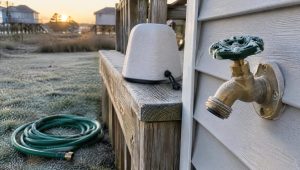
There’s one big exception. A pipe that sits right in the wind, like an outdoor faucet or a bare line under a raised home, can freeze at higher temperatures than a pipe tucked inside the house. Wind pulls heat off the pipe much faster than still air.
How Long Does It Take for Pipes to Freeze?
Exposed pipes can freeze in about 6 hours or less once the air around them drops to 20 degrees. The colder it gets, the faster it happens. Here’s a rough guide for pipes in unheated spaces:
- 28 degrees for 4+ hours: the classic “hard freeze.” Start protecting exposed pipes.
- Around 20 degrees: exposed pipes can freeze in about 6 hours or less.
- Around 15 degrees: freezing can happen in about 3 to 4 hours.
- 10 degrees or below: exposed pipes can freeze in under 2 hours.
Will My Pipes Freeze in One Night?
Yes, your pipes can freeze in one night if the low stays in the low 20s or colder for several hours. The coldest part of most winter nights comes right around sunrise. That’s why people often find a frozen pipe first thing in the morning, when nothing comes out of the faucet.
Do PEX, Copper, and PVC Pipes Freeze at Different Temperatures?
No. The water inside freezes at the same temperature no matter what the pipe is made of. What changes is how well the pipe handles the ice. PEX, the flexible plastic tubing used in many newer homes, can stretch a little as water freezes, so it’s less likely to split than copper or PVC. It can still burst in a hard freeze, though.
Copper and PVC don’t stretch, so they’re more likely to crack. PVC also gets brittle in the cold. If your home has older copper or PVC lines in a crawl space or under the house, those are the pipes to insulate first.
Which Pipes Freeze First in Coastal North Carolina Homes?
The pipes that freeze first are the ones outside your heated living space. In our area, these are the usual suspects:
- Outdoor faucets and hose bibs. They sit right in the wind. Our guide on how to keep an outdoor faucet from freezing walks through the 5 steps.
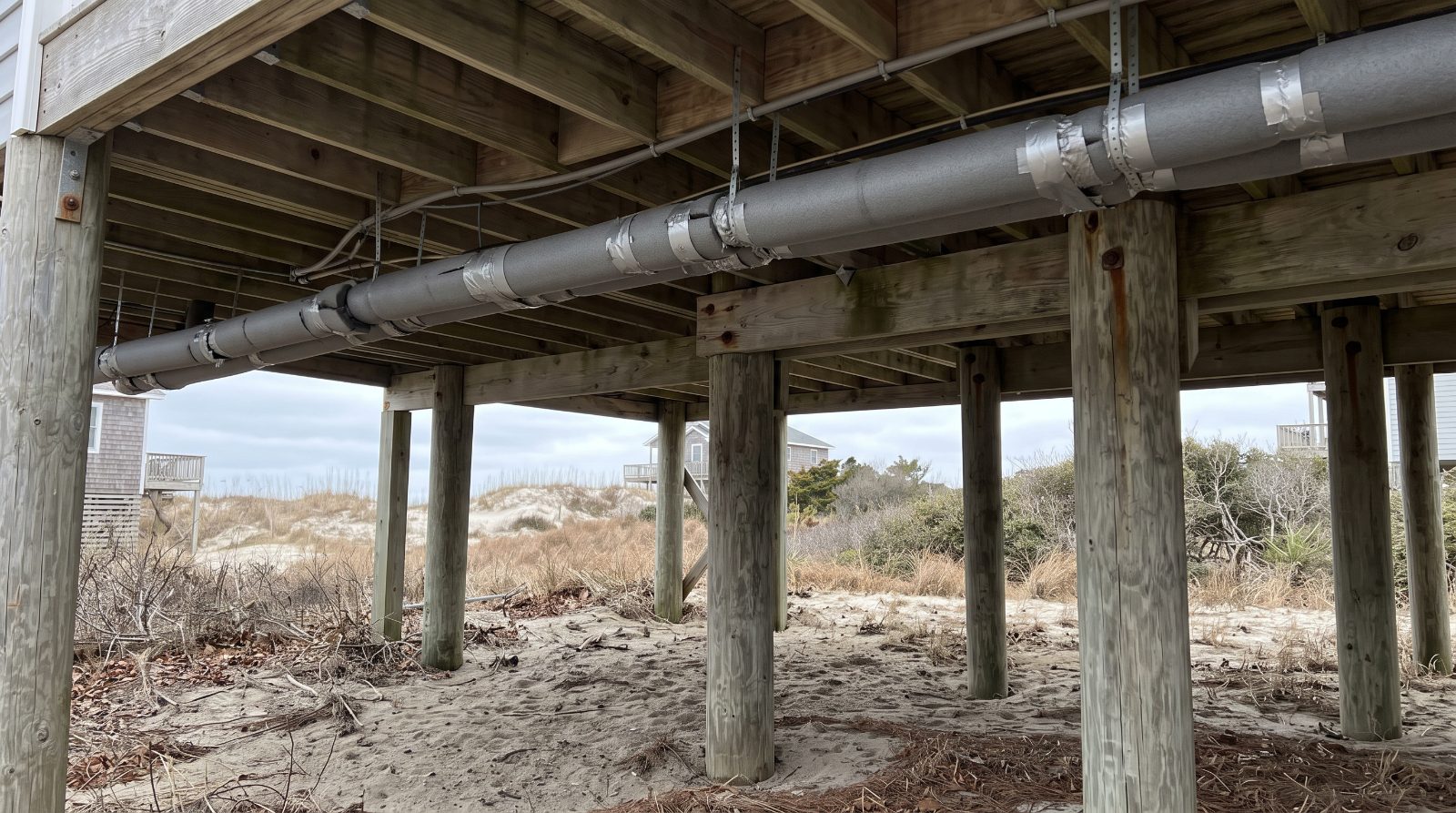
- Pipes under homes on pilings. Many homes near Topsail Beach and Surf City run water lines under the house in open air.
- Crawl space pipes. Open foundation vents let cold air flow right across the lines.
- Pipes in outside walls. Kitchen and bathroom sinks on an exterior wall freeze before sinks on inside walls.
- Garage and attic lines. Water heater lines and laundry hookups in an unheated garage are at risk too.
If your home sits on pilings or a vented crawl space, plan to protect your pipes earlier than a neighbor with a slab home. If you own a second home near the beach, our vacation home winterizing checklist covers what to shut off and what to leave on.
Bare Pipes Under the House? Let Us Take a Look.
Our plumbers can check your crawl space or pilings, insulate exposed lines, and spot weak pipes before the next hard freeze in Hampstead, Topsail Island, or Wilmington. Call (910) 807-7990 or book online.
Book a Freeze-Prep Plumbing VisitAt What Temperature Should You Drip Your Faucets?
A good rule of thumb is to drip your faucets when the forecast low drops into the low 20s or below, or when it will sit at 28 or colder for several hours with wind. Focus on faucets fed by pipes in outside walls, crawl spaces, or under a raised home. You don’t need to drip every faucet in the house.
A slow, steady drip from the cold side is enough. Moving water is harder to freeze, and an open faucet relieves pressure if ice does start to form. If you have a single-handle faucet, set it to the middle so both the hot and cold lines get a little flow.
How Do You Keep Pipes From Freezing Tonight?
You can protect most pipes in under 30 minutes. Work through this list before any night with a forecast low of 28 or colder:
- Keep the heat at 55 degrees or higher, day and night, even if you leave town.
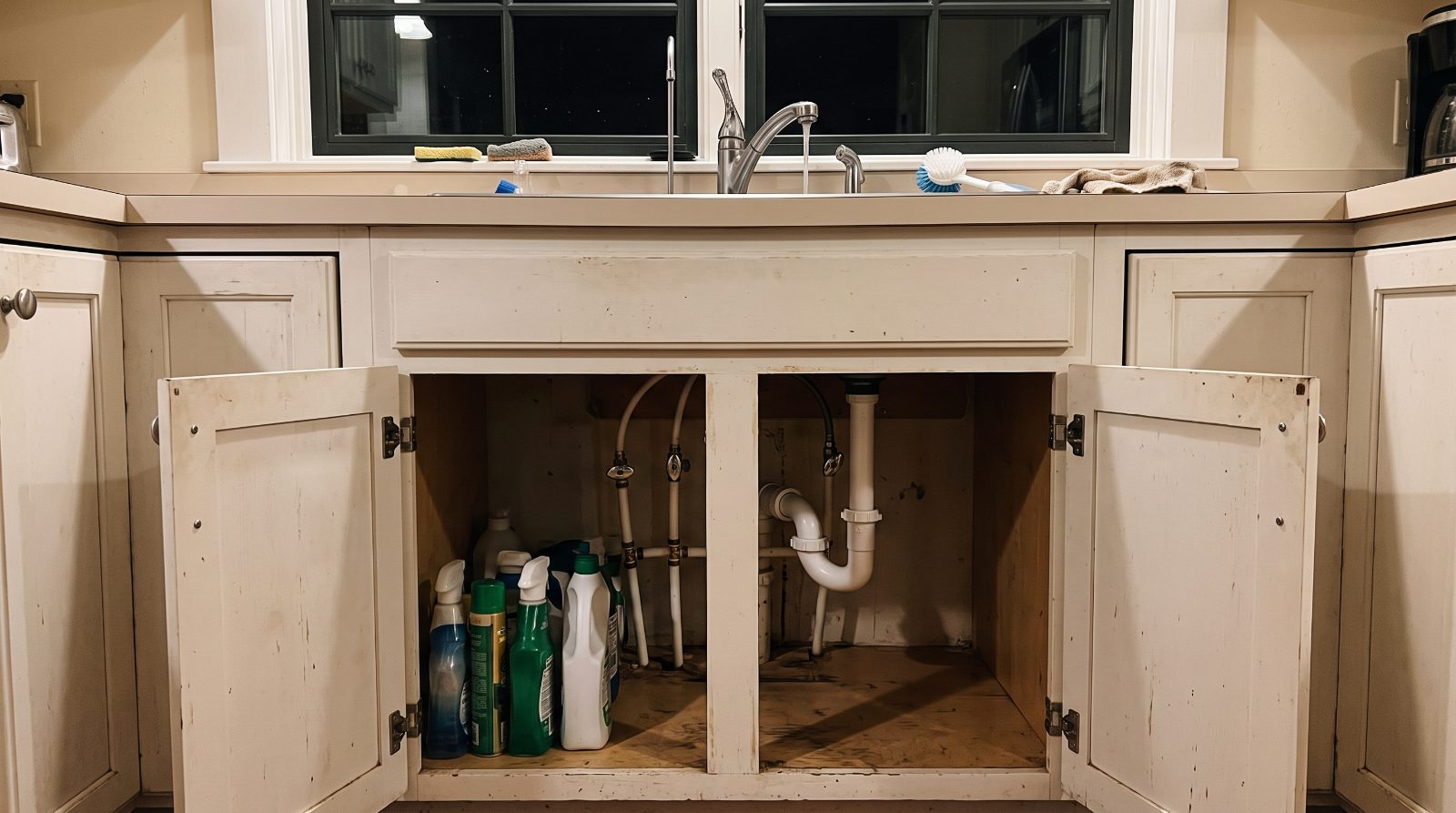
- Open the cabinet doors under kitchen and bathroom sinks on outside walls so warm air reaches the pipes.
- Drip the faucets fed by your most exposed pipes.
- Unhook garden hoses and shut off and drain outdoor faucets.
- Close crawl space vents and keep the garage door shut.
- Wrap bare pipes in foam pipe insulation, especially under raised homes.
- Know where your main shutoff is, so you can stop the water fast if a pipe breaks.
What Should You Do If Your Pipes Freeze?
If your pipes freeze, keep the faucet open and thaw the pipe slowly with gentle heat. You’ll usually know a pipe froze when you turn on a faucet and only a trickle comes out, or nothing at all. Act fast, because ice keeps building pressure inside the pipe.
- Open the faucet the frozen pipe feeds, so melting water has a way out.
- Warm the pipe with a hair dryer, a heating pad, or a space heater kept a safe distance away.
- Start near the faucet and work back toward the frozen spot.
- Never use a torch, a lighter, or any open flame.
- If you can’t find the frozen section or reach it, shut off the main water and call a plumber.
Why Do Frozen Pipes Burst, and How Can You Tell?
Frozen pipes burst because ice builds pressure inside the pipe between the frozen spot and the closed faucet. The pipe often splits while it’s still frozen, so you won’t see a leak until it thaws. Watch for these signs after a hard freeze:
- Water stains or bubbling paint on walls or ceilings
- Puddles in the crawl space, garage, or under a sink
- The sound of running water when every faucet is off
- A sudden jump in your water bill
- Low water pressure at one or more faucets
If you spot any of these, shut off your main water valve right away and call for help. Our team handles leak detection and slab leak repair and can track down a hidden break. We can also repair or replace split pipes once we find them.
Want Your Pipes Checked Before the Next Hard Freeze?
A yearly plumbing visit is the easiest way to catch bare pipes, worn shutoff valves, and weak spots before winter does. Members of our Great Day Advantage Plan maintenance membership get a plumbing visit every year.
Frozen or Leaking Pipe?
Great Day Plumbing and Air serves Hampstead, Topsail Island, and Wilmington. Call (910) 807-7990 or send us a message.
Contact Great Day Plumbing and Air