Quick Answer: Emergency heat is a backup setting on your heat pump thermostat. It shuts off the outdoor unit and heats your home with electric heat strips inside the air handler. Use it only when the outdoor unit is broken, damaged, or iced over, because it costs a lot more to run than normal heat.
Emergency heat on a heat pump is the backup setting that turns off your outdoor unit and runs only the electric heat strips inside your home. It’s there for when the heat pump can’t do its job, not for extra warmth on a cold night. Most of the time, your thermostat should stay on regular “Heat.”
Lots of homes in Hampstead, Topsail Island, and Wilmington heat with a heat pump, so this question comes up every winter. If you see “EM Heat,” “Emergency Heat,” or a red light on your thermostat, here’s what it means. And if your system needs help, our team handles heat pump repair in Hampstead and Wilmington.
What Is Emergency Heat on a Heat Pump?
Emergency heat is a manual thermostat setting that skips your heat pump completely. In normal heat mode, your outdoor unit pulls heat out of the outside air and moves it into your home. That’s very efficient. When you switch to emergency heat, the outdoor unit and its compressor shut off, and your system heats the house with only its backup heat source.
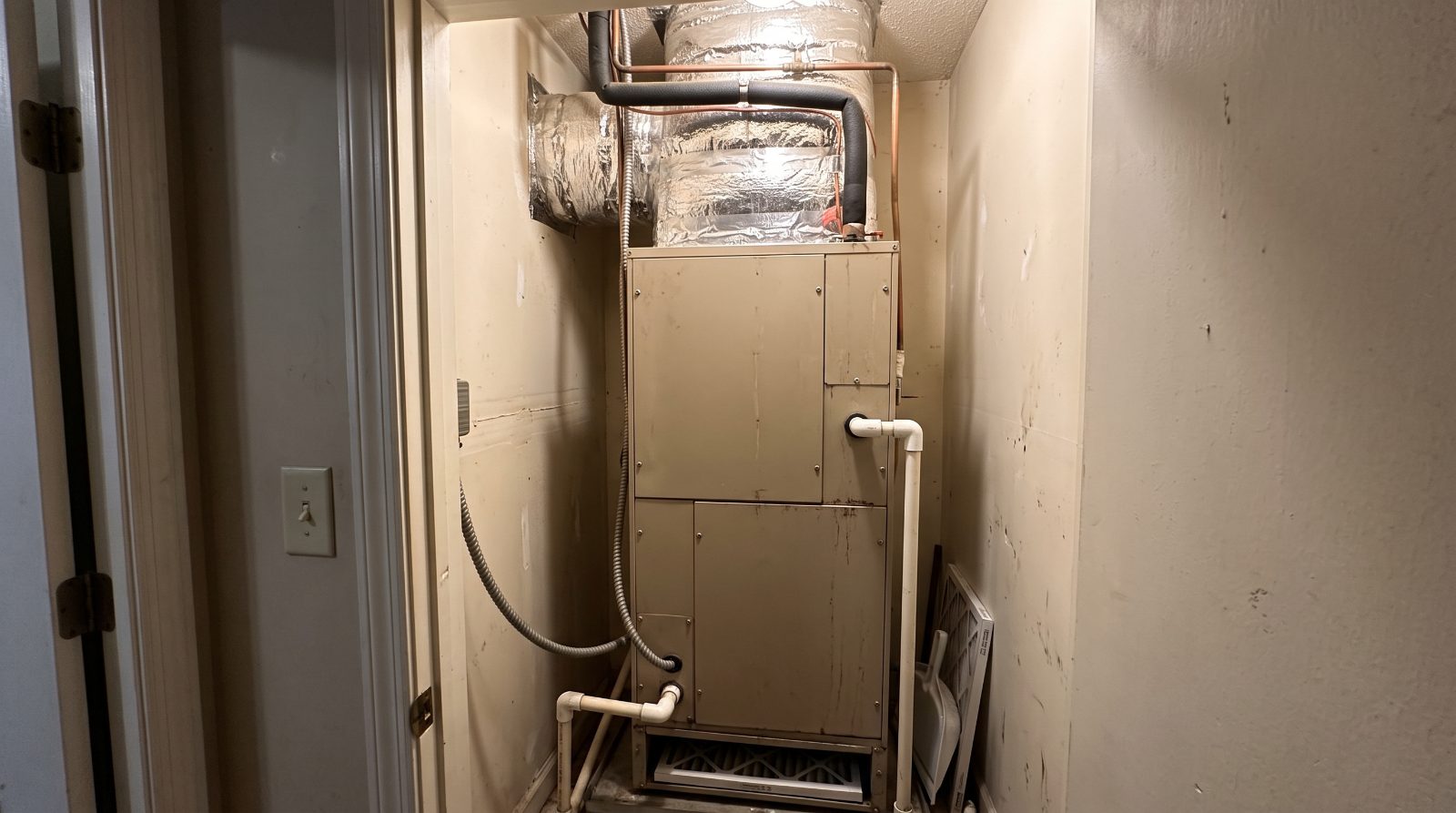
In many homes, that backup is a set of electric heat strips inside the indoor air handler. They work a lot like the coils in a toaster or a space heater. Some homes have a gas furnace as the backup instead, which is called a dual-fuel system.
Where Is Emergency Heat on Your Thermostat?
On most heat pump thermostats, emergency heat is one of the mode options, right next to Heat, Cool, and Off. It may be labeled “Em Heat,” “Emer,” or “Emergency Heat.” On a smart thermostat, it’s usually inside the system mode menu.
Many thermostats show a red light or an on-screen alert while emergency heat is on. If you see one and don’t remember turning it on, check the mode setting before you assume the system is broken. Someone in the house may have switched it by accident. To turn it off, set the mode back to regular “Heat.”
If your thermostat has no emergency heat option at all, you probably don’t have a heat pump, or you have a dual-fuel system that handles backup heat on its own. Your owner’s manual or your HVAC technician can confirm which one you have.
How Is Emergency Heat Different From Aux Heat?
Aux heat turns on by itself to help your heat pump, while emergency heat is something you turn on to replace your heat pump. Both use the same backup heat strips. The difference is who’s in charge and whether the outdoor unit keeps running.
- Aux heat (auxiliary heat): Your system turns it on automatically. It helps during a defrost cycle, on very cold nights, or when you bump the thermostat up several degrees at once. The heat pump keeps running too.
- Emergency heat: You turn it on by hand. The outdoor unit shuts off and the backup heat does all the work.
Seeing “Aux” on your thermostat for a few minutes now and then is normal. Seeing it constantly, or having to use emergency heat to stay warm, usually means something needs a look.
When Should You Use Emergency Heat on a Heat Pump?
Use emergency heat only when your outdoor unit can’t run safely or can’t keep your home warm. Cold weather alone is not a reason to switch it on. Good reasons include:
- The outdoor unit stopped working and your home is getting cold while you wait for a repair
- The outdoor unit is covered in ice that won’t melt after a defrost cycle
- A storm, fallen limb, or debris damaged the outdoor unit
- The outdoor unit makes loud grinding, banging, or screeching noises
Think of emergency heat as the spare tire. It gets you through until the repair, and then you switch back.
Stuck on Emergency Heat?
Running on backup heat drives up your power bill fast. Our technicians can find out why your heat pump stopped and get it running again in Hampstead, Topsail Island, or Wilmington. Call (910) 807-7990 or book online.
Book Heat Pump ServiceHow Much More Expensive Is Emergency Heat?
Emergency heat often costs two to three times as much to run as your heat pump. The reason is simple. A heat pump moves existing heat from outside into your home, so it delivers more heat than the electricity it uses. Heat strips have to make all of that heat from electricity, one for one.
A day or two on emergency heat won’t break the bank. A few weeks will show up on your power bill. If you forgot to switch back after a cold snap, or your thermostat keeps landing on emergency heat, fix that first.
How Long Can You Run Emergency Heat?
You can run emergency heat as long as you need to keep your home safe and warm, but it’s meant to be temporary. It won’t hurt your system to use it for a few days while you wait for a repair. The real cost is your power bill, plus the risk of a bigger problem with the outdoor unit going unnoticed.
If you’ve been on emergency heat for more than a day or two, schedule a service visit. The same goes if your home won’t stay warm on regular heat once the weather warms up.
Should You Turn On Emergency Heat During an Ice Storm?
Only if ice has built up on the outdoor unit and it isn’t clearing. Your heat pump has a built-in defrost cycle that melts normal frost, and you may see steam rising off the unit while it runs. That’s normal, so leave the thermostat on regular heat.
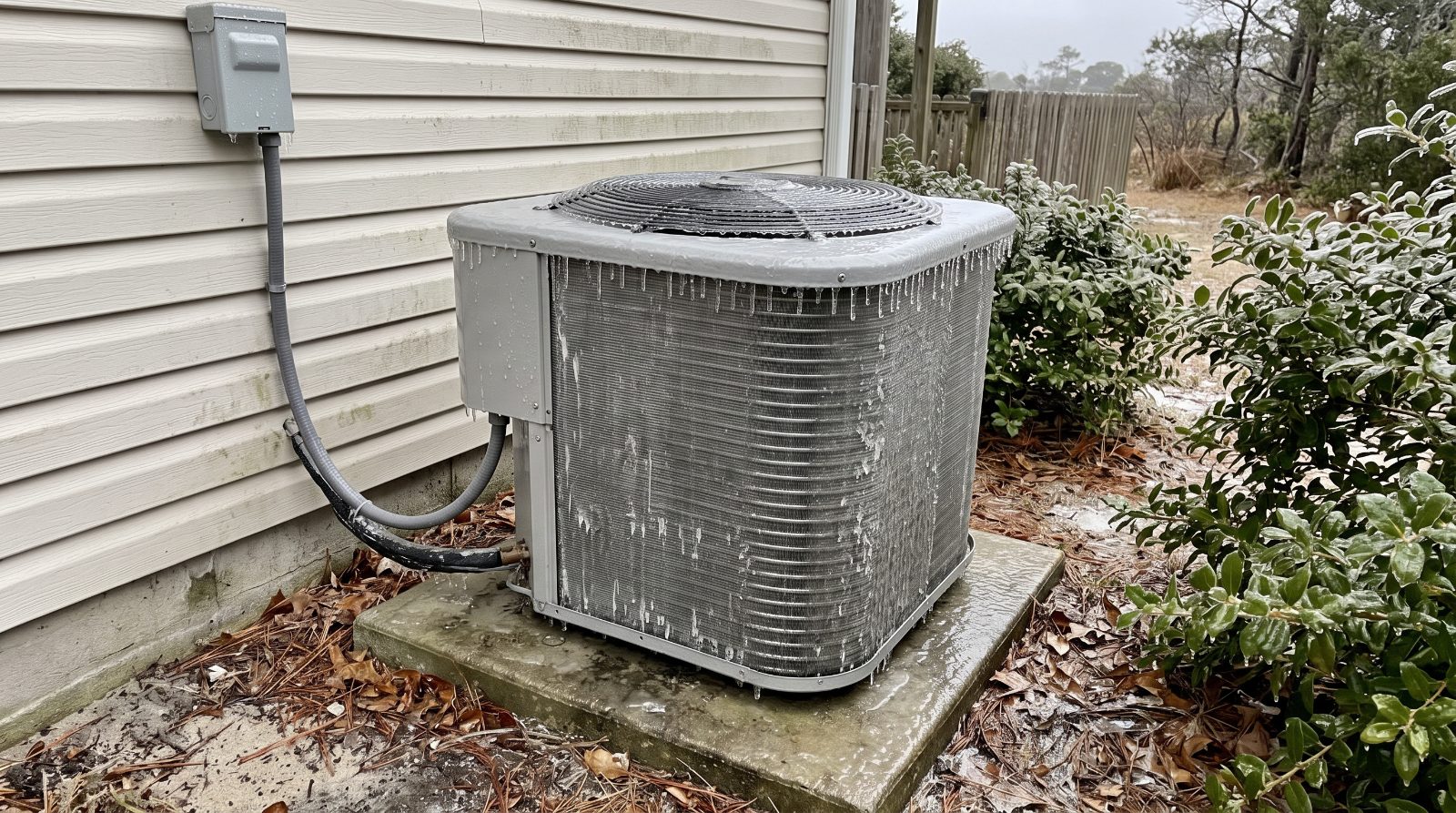
Freezing rain is different. If the top and sides of the unit stay coated in solid ice, or the fan blade is frozen in place, switch to emergency heat to protect the unit until the ice melts. Don’t chip at the ice with a tool, because you can bend the thin coil fins. Once the ice clears, switch back to regular heat. If the unit still won’t run, call for service. If an ice storm knocks out your power, protect your plumbing too. Here’s what temperature pipes freeze and how fast it happens.
What If Emergency Heat Came On by Itself?
Emergency heat rarely turns on by itself, so first check what your thermostat actually says. Many thermostats show “Aux” or “Aux Heat” when backup heat helps out, and people often read that as emergency heat. Short bursts of aux heat are normal.
Call a technician if you notice any of these:
- Aux heat runs nearly all the time, even on mild days
- Your thermostat switched to emergency heat and won’t go back
- The outdoor unit isn’t running when the thermostat calls for heat
- Your heat pump runs nonstop but the house stays cold
- Your power bill jumped with no change in the weather
These can point to a low refrigerant charge, a failed part in the outdoor unit, or a thermostat problem. A technician can track it down. If your vents are blowing cool air too, our guide on why a heat pump blows cold air covers 7 causes to check first.
Why Does Emergency Heat Smell Like Something Is Burning?
A light burning smell for a few minutes is usually dust burning off the heat strips. They often sit unused for months, so dust settles on them. The smell should fade quickly.
If the smell is strong, lasts more than a few minutes, or smells like melting plastic or wires, turn the system off at the thermostat and call for service. Don’t keep running it.
How Can You Keep Your Heat Pump Off Emergency Heat?
Regular maintenance is the best way to keep your heat pump running on its own all winter. A technician can check the refrigerant charge, the defrost controls, the backup heat strips, and the outdoor coil before cold weather hits. You can help too:
- Change your air filter on schedule
- Keep leaves, pine straw, and shrubs at least 2 feet away from the outdoor unit
- Avoid big jumps on the thermostat, which can trigger aux heat
- Leave the thermostat on regular “Heat” unless you have a real reason to switch
Members of our Great Day Advantage Plan maintenance membership get two heating and air maintenance visits every year, so your heat pump gets checked before winter and before summer.
Heat Pump Not Keeping Up?
Great Day Plumbing and Air serves Hampstead, Topsail Island, and Wilmington. Call (910) 807-7990 or send us a message.
Contact Great Day Plumbing and Air